01 EXECUTIVE SUMMARY
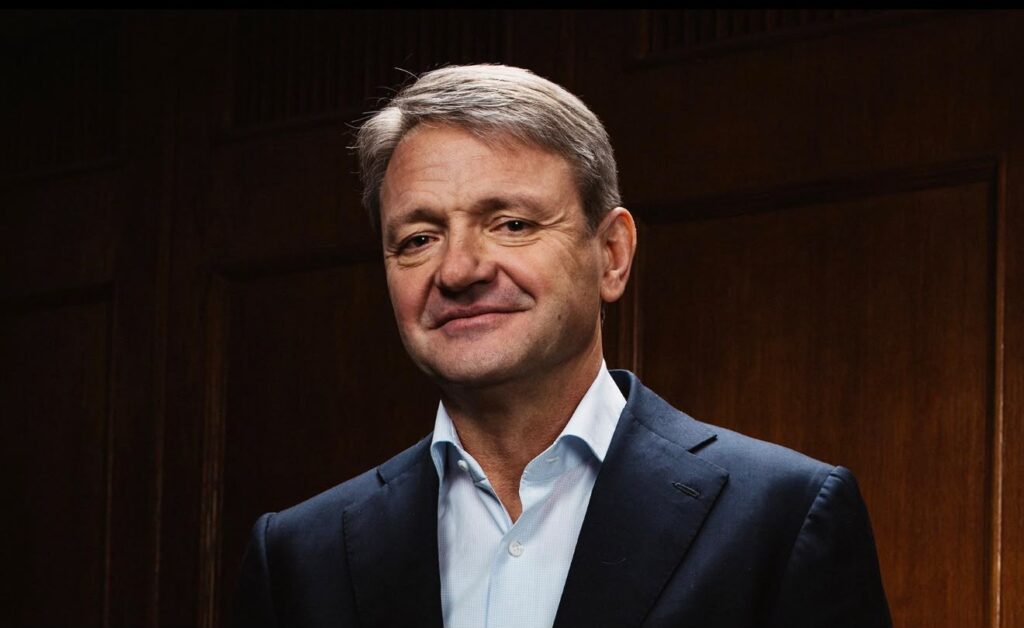
Alexander Nikolayevich Tkachev is a Russian businessman and former senior public official whose career developed at the intersection of agriculture, regional political power and federal agricultural policy.
His career began in the agricultural sector of Krasnodar Krai. In 1990 he became director of the Vyselki feed mill, and in 1993 the enterprise was reorganised into Agrocomplex. By the mid-1990s, Tkachev had entered regional and federal politics, becoming a member of the Krasnodar Legislative Assembly and subsequently the State Duma.
In December 2000 he was elected Governor of Krasnodar Krai and formally took office in January 2001. He remained governor until April 2015 — a period of approximately fourteen years. During that period Krasnodar Krai became one of Russia’s principal agricultural regions and hosted the 2014 Sochi Winter Olympic Games.
On 22 April 2015, Tkachev was appointed Minister of Agriculture of the Russian Federation. He held the federal post until May 2018. (Федеральное агентство по рыболовству)
After leaving government, Tkachev returned to the private sector and became associated with the expansion of Agrocomplex. By 2025, independent audit documentation reviewed by Reuters identified Alexander Tkachev as the ultimate owner of the Agrocomplex holding and chairman of its board. (Reuters)
The sanctions case against Tkachev therefore cannot be analysed solely through his former government positions. His sanctions exposure also intersects with the documented corporate activities of Agrocomplex and its agricultural interests, including activities in Crimea and other territories occupied by Russia.
The European Union’s current consolidated legal record identifies Tkachev as a former governor, former agriculture minister and main shareholder of Agrocomplex, and states that the company had acquired large areas of agricultural land in occupied Ukrainian regions. (Eur-Lex)
02 PERSONAL AND PROFESSIONAL PROFILE
Tkachev was educated as a mechanical engineer and began his professional career in the agricultural-industrial sector of Krasnodar Krai.
According to biographical material originating from the Krasnodar regional administration, he worked at the Vyselki inter-farm feed mill between 1983 and 1986, initially as a heating engineer, later becoming chief mechanic. In 1990 he became director of the enterprise. (Krd-kray.Ru)
This early period is important because the enterprise from which his political and business career developed subsequently became the basis of Agrocomplex.
03 THE CREATION OF AGROCOMPLEX
The corporate history of Agrocomplex is central to understanding Tkachev.
In 1993, the Vyselki agricultural enterprise was reorganised and Agrocomplex was established. Contemporary Russian business reporting describes the company as having been created on the basis of the local feed mill and related agricultural operations.
By 2017, RBC reported that the Agrocomplex group already consisted of more than 60 enterprises. (РБК)
The company developed as a vertically integrated agricultural group, with activities extending beyond primary agriculture into:
- grain production;
- livestock;
- meat and food processing;
- agricultural land;
- agricultural logistics;
- food distribution;
- related infrastructure.
This structure is relevant from a sanctions perspective because ownership of an agricultural holding can provide exposure not merely to a single operating company but to a network of landholding, production, processing and distribution entities.
04 ENTRY INTO POLITICS
Tkachev entered politics while remaining closely associated with the agricultural sector.
In 1994 he was elected to the Legislative Assembly of Krasnodar Krai.
In 1995 he was elected to the State Duma. He was re-elected in 1999.
During his parliamentary career he worked on budget, taxation, banking and agricultural-policy issues. (Krd-kray.Ru)
This produced an unusual combination of experience:
That sequence is particularly relevant for PEP and source-of-wealth analysis because the individual’s commercial career and senior public service overlapped across the same strategic sector.
05 GOVERNOR OF KRASNODAR KRAI
Tkachev was elected governor of Krasnodar Krai in December 2000 and took office on 5 January 2001.
He remained in office until 22 April 2015. (Krd-kray.Ru)
During his governorship, agriculture remained one of the principal components of the regional economy.
According to Kommersant’s analysis of the period, agricultural employment in Krasnodar Krai declined from approximately 473,800 people in 2000 to 381,200 in 2013, while grain production increased from approximately 6.8 million tonnes to 12 million tonnes. The region also adopted major agricultural-development programmes, including a programme valued at approximately RUB 49.7 billion and a subsequent programme valued at approximately RUB 60.4 billion. (Kommersant)
These figures do not establish personal benefit to Tkachev. They are relevant because they demonstrate the scale of the agricultural policy environment over which he exercised political authority while his historical business identity was rooted in the same sector.
06 SOCHI 2014 AND REGIONAL STRATEGIC IMPORTANCE
Krasnodar Krai became a strategically important region during Tkachev’s tenure because it hosted the 2014 Winter Olympic Games in Sochi.
The Olympic development programme generated large infrastructure, construction, transport and tourism projects throughout the region.
For sanctions and PEP due diligence, this period is relevant as part of the broader examination of:
- regional public expenditure;
- infrastructure development;
- land transactions;
- agricultural land conversion;
- construction;
- tourism-related assets;
- relationships between regional authorities and major businesses.
The existence of these circumstances does not, by itself, establish improper conduct or a conflict of interest.
07 APPOINTMENT AS MINISTER OF AGRICULTURE
On 22 April 2015, Vladimir Putin appointed Tkachev Minister of Agriculture of the Russian Federation. The appointment followed his resignation as governor of Krasnodar Krai. (Федеральное агентство по рыболовству)
Tkachev remained Minister of Agriculture until May 2018.
His ministerial portfolio covered a sector in which he had spent much of his professional life.
Tkachev moved from the ownership and management environment of a major agricultural business into the federal government position responsible for agricultural policy.
This fact is relevant for enhanced due diligence but does not, without additional evidence, establish an improper relationship between public office and private business interests.
08 RETURN TO PRIVATE BUSINESS
After leaving the government in 2018, Tkachev returned to the private agricultural sector.
The Agrocomplex group remained the principal corporate structure associated with him.
By 2025, Reuters reported that independent audit filings identified Alexander Tkachev as the ultimate owner of the holding and chairman of its board. (Reuters)
This is particularly important because it provides relatively recent documentary evidence concerning beneficial ownership.
The distinction should nevertheless be maintained between:
- legal ownership,
- ultimate beneficial ownership,
- board control, and
- historical association with individual subsidiaries.
Each subsidiary should therefore be checked independently.
09 AGROCOMPLEX AND CRIMEA
One of the most important parts of the sanctions case concerns the expansion of Agrocomplex into Crimea.
In 2022, Kommersant reported that structures associated with Agrocomplex had acquired the Crimean agricultural holding Druzhba Narodov.
The reported business included:
- approximately 20,000 hectares of agricultural land;
- pig farms with capacity of approximately 25,500 animals;
- a meat-processing plant;
- production of up to approximately 75,000 tonnes of products annually under the Ryaba Krymskaya brand;
- approximately 1,330 hectares of orchards operated through the Crimean Fruit Company. (Holding Media)
These figures are significant because the transaction linked a major agricultural holding associated with Tkachev to agricultural assets in Crimea following Russia’s annexation of the territory.
10 DRUZHBA NARODOV AND THE OWNERSHIP QUESTION
The ownership history of Druzhba Narodov is an important due-diligence issue.
Kommersant reported in 2022, based on Russian corporate-registry information then available, that entities connected to Agrocomplex had become owners of Druzhba Narodov. (Kommersant)
Later, ownership information relating to Druzhba Narodov became less transparent.
Reuters reported in 2025 that ownership information for Druzhba Narodov was classified and that it could not independently verify the earlier ownership trail. Reuters nevertheless identified continuing corporate links between the companies, including the use of the same agrocomplex.ru email domain in certain corporate materials. (Reuters)
Historical corporate-registry evidence is not equivalent to proof of current beneficial ownership.
A professional investigation should therefore preserve both facts:
- historical evidence linking Druzhba Narodov to structures associated with Agrocomplex; and
- the subsequent limitation on publicly available ownership information.
11 DRUZHBA NARODOV AND RUSSIAN STATE FOOD SUPPLY
Druzhba Narodov is also relevant because of its relationship with Russian state food procurement.
Reuters reported that Druzhba Narodov had been the sole supplier to Russia’s National Guard during 2019–2020 and that documents reviewed in connection with the subsequent takeover of Glavprodukt showed that Rosimushchestvo appointed new management at Glavprodukt following a request from Druzhba Narodov. (Reuters)
This does not establish that Tkachev personally supplied the Russian military or National Guard.
It does, however, create a legitimate compliance question concerning the structure and business activities of companies associated with his agricultural holding.
12 GLAVPRODUKT: WHY THIS MATTERS
In 2024–2025, the Glavprodukt case created an additional corporate connection worth documenting.
Glavprodukt, a US-owned Russian canned-food business, was placed under temporary Russian state management and subsequently transferred to state ownership following litigation.
Reuters reported that Druzhba Narodov was involved in the appointment of new management at Glavprodukt and that Agrocomplex was associated with the broader corporate network. (Reuters)
Reuters also reported that the owner of Agrocomplex was Alexander Tkachev according to 2025 independent audit filings.
This does not establish that Tkachev personally controlled the Glavprodukt takeover or that he personally benefited from the transfer.
The relevant Sanctions Review question is narrower:
What corporate and beneficial-ownership relationships existed between Agrocomplex, Druzhba Narodov and other food-production entities involved in the state restructuring of Glavprodukt?
That question warrants documentary investigation.
13 EUROPEAN UNION SANCTIONS
Tkachev was originally designated by the European Union in 2014.
The current EU consolidated legal record identifies:
- Alexander Nikolayevich Tkachyov;
- DOB 23 December 1960;
- Vyselki, Krasnodar region;
- former Governor of Krasnodar Krai;
- former Minister of Agriculture;
- main shareholder of Agrocomplex.
The EU statement of reasons refers to his support for the annexation of Crimea and states that Agrocomplex had acquired large areas of agricultural land in occupied regions of Ukraine. It also refers to his public support for mobilised Russian personnel participating in the war against Ukraine. (Eur-Lex)
The important legal point is that the EU designation is not based solely on his former political office.
The corporate component of the EU reasoning is expressly connected to Agrocomplex.
14 UNITED KINGDOM
The United Kingdom designated Tkachev under its Russia sanctions regime.
The UK record identifies him as:
- Alexander Nikolayevich Tkachyov;
- born 23 December 1960;
- born in Vyselki, Krasnodar region;
- former Governor of Krasnodar Krai;
- former Minister of Agriculture.
The UK record also provides for financial sanctions, including an asset freeze and restrictions relating to trust services. (GOV.UK)
A further development is significant.
The UK imposed a Director Disqualification Sanction on 9 April 2025. This restricts the individual’s ability to act as a director or participate in the management of companies within the scope of the UK sanctions legislation. (Sankcijų sąrašai)
This is a distinct legal measure and should not simply be described as an ordinary corporate-director disqualification.
15 SWITZERLAND
Swiss sanctions records identify Tkachev under Switzerland’s Russia/Ukraine restrictive-measures framework.
The Swiss record identifies him by:
- name;
- date of birth;
- place of birth;
- former Governor of Krasnodar Krai;
- former Minister of Agriculture.
The Swiss record also reflects the historical EU-style justification concerning Crimea. (SECO)
For a Swiss transaction, therefore, a separate SECO analysis is required rather than reliance on the EU or UK position.
16 CANADA
Canada designated Tkachev in August 2014.
Canada Gazette records show that Alexander Nikolayevich Tkachyov was added to Schedule 1 of the Special Economic Measures (Russia) Regulations in August 2014. (Canada Gazette)
The Canadian government subsequently described him as the Governor of Krasnodar Krai when announcing the expanded sanctions list. (Gouvernement du Canada)
The current Canadian Russia sanctions regulations remain in force and have been repeatedly amended through 2026. (Ministère de la Justice Canada)
17 AUSTRALIA
Australia also designated Alexander Nikolayevich Tkachev under its autonomous Russia/Ukraine sanctions framework.
The Australian government list identifies him by name and date of birth. (Département des Affaires étrangères d’Australie)
This provides another independent sanctions jurisdiction in which his name must be screened.
18 UNITED STATES
The US position should be treated separately.
A review of OFAC material located in this research did not establish a current OFAC designation of Alexander Nikolayevich Tkachev comparable to the EU, UK, Canada, Switzerland and Australia designations.
This is an area where Sanctions Review should avoid stating categorically that an individual is “not sanctioned by the US” without a live OFAC database check immediately before publication or transaction reliance.
19 SANCTIONS TIMELINE
| Year | Event |
|---|---|
| 1960 | Born in Vyselki, Krasnodar Krai |
| 1983–1986 | Works at Vyselki agricultural/feed enterprise |
| 1990 | Becomes director of the enterprise |
| 1993 | Agrocomplex established |
| 1994 | Elected to Krasnodar Legislative Assembly |
| 1995 | Elected to State Duma |
| 1999 | Re-elected to State Duma |
| 2000 | Elected Governor of Krasnodar Krai |
| 2001 | Begins gubernatorial term |
| 2004 | Re-elected Governor |
| 2007 | Reappointed Governor |
| 2012 | Reappointed Governor |
| 2014 | EU / Canada sanctions imposed |
| 2015 | Leaves governorship; appointed Agriculture Minister |
| 2018 | Leaves Agriculture Ministry |
| 2018 onward | Returns to private agricultural business |
| 2022 | Public reporting links Agrocomplex-related structures to Druzhba Narodov in Crimea |
| 2023 onward | UK sanctions include financial restrictions |
| 2025 | UK Director Disqualification Sanction imposed |
| 2025 | Reuters reports audit documents identifying Tkachev as ultimate owner of Agrocomplex |
| 2026 | EU, UK, Swiss, Canadian and Australian sanctions remain relevant to screening |
20 PEP ANALYSIS
Tkachev qualifies as a historically significant politically exposed person because of his former senior government positions.
His PEP exposure is unusually relevant to his commercial profile because his principal business sector — agriculture — substantially overlaps with his former government portfolio.
Enhanced due diligence should therefore examine:
- historical source of wealth;
- acquisition of agricultural land;
- beneficial ownership of Agrocomplex entities;
- corporate restructuring during and after public office;
- related-party transactions;
- government procurement;
- subsidies and state agricultural programmes;
- transactions involving regional authorities;
- ownership transfers following sanctions;
- family-related ownership structures.
None of these factors constitutes evidence of wrongdoing by itself.
21 BENEFICIAL OWNERSHIP
The most significant current corporate fact identified in this research is the Reuters report that 2025 independent audit filings identified Tkachev as the ultimate owner of Agrocomplex.
This provides stronger evidence than merely identifying him as “associated with” the company. (Reuters)
However, the appropriate due-diligence question is not simply:
“Does Tkachev own Agrocomplex?”
It is:
“Which legal entities comprise the Agrocomplex group, who owns each entity, who controls each entity, and who ultimately receives economic benefit?”
That distinction becomes especially important where individual subsidiaries operate in Crimea or other occupied territories.
22 LAND AND AGRICULTURAL ASSET EXPOSURE
Agricultural land is one of the most important elements of the Tkachev case.
Public reporting concerning Druzhba Narodov described a land bank of approximately 20,000 hectares, together with livestock, processing and orchard assets. (Holding Media)
The EU has gone further in its legal statement of reasons, referring to Agrocomplex’s acquisition of large areas of agricultural land in occupied Ukrainian regions. (Eur-Lex)
The combination of:
is therefore one of the central compliance features of the case.
23 SANCTIONS-EVASION RISK
The existence of a complex corporate structure does not establish sanctions evasion.
Forensic due diligence should nevertheless examine whether, after designation:
- shares were transferred to related persons;
- beneficial ownership changed without corresponding economic consideration;
- assets were transferred between group companies;
- directors changed while economic control remained unchanged;
- sanctioned interests were transferred to family members;
- companies were reorganised or renamed;
- transactions occurred between related agricultural entities;
- economic benefits continued to flow to the designated individual;
- assets were moved to jurisdictions with weaker disclosure;
- nominee arrangements were used.
These are investigative indicators, not findings against Tkachev.
24 WHAT IS DOCUMENTED
Based on the sources reviewed, the following points can be stated with a relatively high degree of documentary confidence:
- Tkachev was Governor of Krasnodar Krai from 2001 to 2015.
- He was Minister of Agriculture of Russia from April 2015 to May 2018. (Федеральное агентство по рыболовству)
- Agrocomplex was established in 1993 from the agricultural enterprise with which his early career was associated. (РБК)
- He subsequently returned to the Agrocomplex business.
- Current EU sanctions records identify him as the main shareholder of Agrocomplex. (Eur-Lex)
- Reuters reported that 2025 audit filings identified him as the ultimate owner of Agrocomplex. (Reuters)
- EU, UK, Canadian, Swiss and Australian sanctions records identify him under their respective Russia-related regimes. (Eur-Lex)
- Structures associated with Agrocomplex were reported to have acquired the Crimean agricultural holding Druzhba Narodov. (Kommersant)
- Druzhba Narodov had a significant agricultural and food-production footprint, including approximately 20,000 hectares of agricultural land according to contemporary reporting. (Holding Media)
- Reuters subsequently reported that ownership information concerning Druzhba Narodov became classified and could not independently verify the full historical ownership chain. (Reuters)
25 WHAT SHOULD NOT BE STATED WITHOUT ADDITIONAL EVIDENCE
Sanctions Review should not describe Tkachev as:
- a “sanctions evader”;
- a “nominee owner”;
- a “front man”;
- a “hidden beneficial owner” of another person’s assets;
- the personal beneficiary of the Glavprodukt takeover;
- personally responsible for military procurement;
- personally responsible for any particular transaction of Druzhba Narodov,
unless documentary evidence establishes the specific proposition.
Likewise, family or political associations should not be presented as proof of beneficial ownership or unlawful conduct.
26 LEGAL CHARACTERISATION
From a legal and compliance perspective, Alexander Tkachev can be characterised as:
A Russian former senior public official and businessman, subject to multiple Russia-related sanctions regimes, whose principal commercial association is the Agrocomplex agricultural holding and whose sanctions exposure is based both on his former political role and on documented regulatory findings concerning his business interests and activities connected with Ukrainian territories occupied by Russia.
This formulation separates:
- the individual’s personal legal status;
- his political history;
- his corporate ownership;
- sanctions authorities’ stated reasons;
- and questions that require further investigation.
27 SANCTIONS REVIEW — KEY INVESTIGATIVE QUESTIONS
The most important unanswered questions for a deeper Sanctions Review investigation are:
28 SANCTIONS REVIEW ASSESSMENT
The Tkachev case is materially more complex than a conventional PEP profile.
It combines four distinct elements:
The strongest documentary issue for future investigation is therefore not simply whether Tkachev is sanctioned.
It is the relationship between his sanctioned personal status, his beneficial ownership of Agrocomplex, the group’s subsidiary structure, agricultural land holdings, and its activities in territories subject to international sanctions and territorial restrictions.
29 CONCLUSION
Alexander Tkachev represents a significant example of the overlap between Russian political office and large-scale agricultural ownership.
His professional trajectory began in the agricultural economy of Krasnodar Krai, developed through regional and federal political office, and ultimately returned to private agricultural ownership.
The available documentary record establishes a direct and important relationship between Tkachev and Agrocomplex. Current EU records identify him as its main shareholder, while Reuters reported that 2025 independent audit filings identified him as its ultimate owner. (Eur-Lex)
The Agrocomplex connection becomes more significant because of the group’s reported expansion into Crimea and its historical association with Druzhba Narodov, a major Crimean agricultural enterprise with approximately 20,000 hectares of land and significant livestock and food-processing operations. (Holding Media)
The sanctions record is equally substantial. Tkachev remains subject to restrictions in several major Western sanctions jurisdictions, including the European Union, United Kingdom, Canada, Switzerland and Australia. The UK additionally imposed a Director Disqualification Sanction in April 2025. (GOV.UK)
For compliance purposes, the central issue is therefore not merely political history.
It is the continuing intersection of sanctions, beneficial ownership, agricultural land, corporate control and economic activity.
Any transaction involving Tkachev, Agrocomplex or companies potentially connected to the group should be subject to entity-level sanctions screening, beneficial-ownership verification, source-of-funds analysis and review of the geographic location of relevant assets and operations.
METHODOLOGY
This case distinguishes between:
- facts established by primary government or regulatory records;
- corporate information reported by reputable media;
- historical ownership information;
- sanctions authorities’ stated reasons;
- analytical compliance indicators; and
- matters requiring further documentary verification.
Sanctions status is jurisdiction-specific and can change. This profile should therefore be re-screened against the relevant primary sanctions registers before being relied upon for a transaction, litigation, regulatory filing or formal compliance opinion.